Top 10 Concrete Patio Ideas for Fort Worth Area Homes
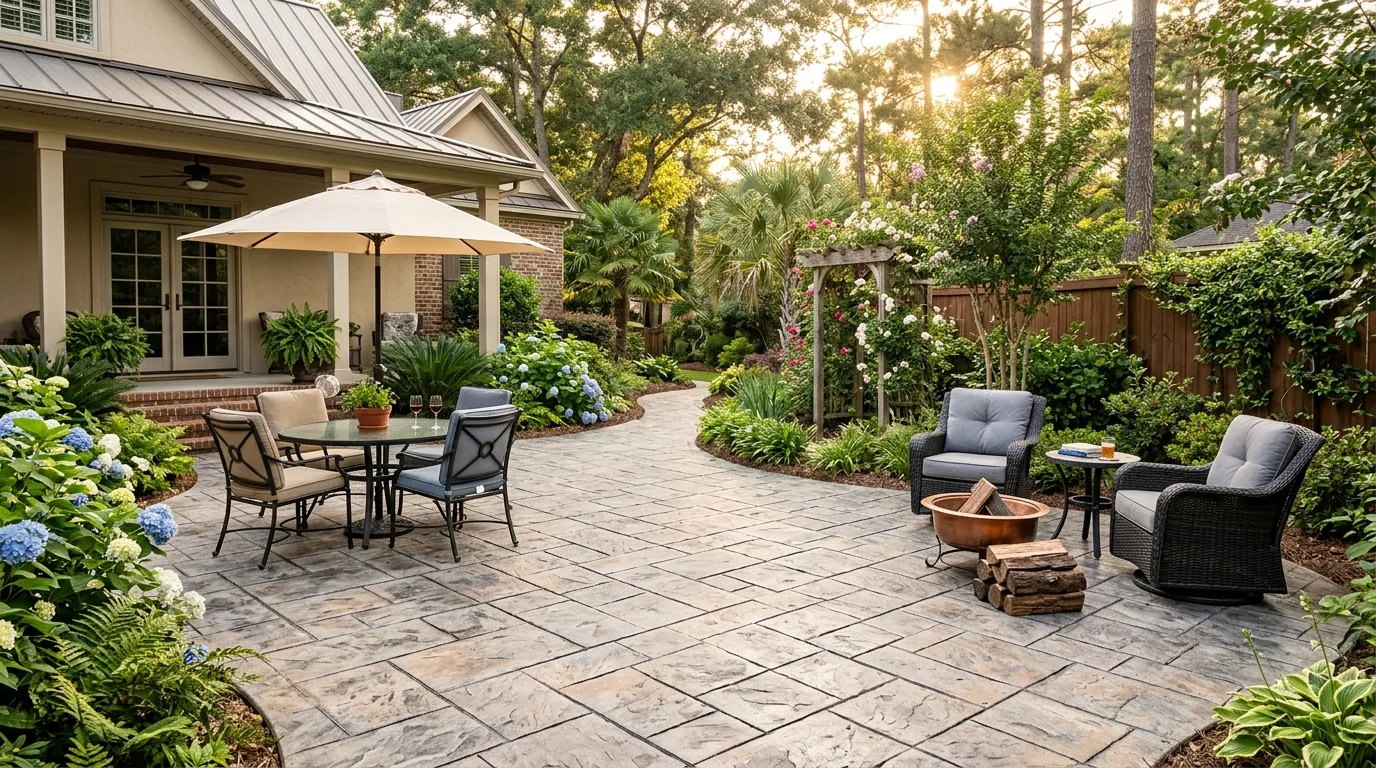
The right concrete patio design for a Fort Worth area home does more than look good at installation — it needs to hold color through North Texas summers, maintain structural integrity on Tarrant County’s clay soil, and work with the architectural style of the home. In this post, we cover ten concrete patio design ideas that combine visual impact with the durability requirements of Haltom City and the broader DFW climate. Each design is appropriate for North Texas conditions and achievable at a realistic price point.
Design Your Haltom City Concrete Patio
We'll help you choose the right pattern, color, and layout for your outdoor space. Free estimate.
Why Design Matters for North Texas Concrete Patios
Concrete patio design in the Fort Worth area involves tradeoffs that don’t apply in cooler, less sunny markets. Pattern complexity affects the stamping window — intricate designs with tight grout lines require a longer working time that hot-weather pours in Haltom City compress significantly. Color choices affect heat absorption and UV fade rate — darker colors look dramatic but require more frequent resealing and absorb more heat in summer, creating a surface that’s less comfortable for barefoot outdoor living in July.
The most successful concrete patios in the Haltom City area and across Tarrant County are ones that were designed with these practical considerations alongside the aesthetic ones. The ten ideas below reflect that balance.
10 Concrete Patio Designs That Work in Haltom City
1. Ashlar Slate Stamped Pattern — the most popular stamped design in North Texas for good reason. The irregular rectangular pattern mimics natural slate but is easier to install cleanly in warm conditions than tight-grout designs. Medium-gray with a charcoal release agent is a classic pairing that complements brick and stone home exteriors common throughout Tarrant County.
2. Cobblestone Border with Plain Interior — a stamped cobblestone border around a broom-finish interior delivers visual definition at lower cost than full stamping. The border adds curb appeal and frames the space; the plain interior is maintenance-friendly for larger areas. A popular choice for patios near Buffalo Ridge Park-area homes where large surface areas make full stamping cost-prohibitive.
3. Exposed Aggregate Natural Finish — removing the surface paste to expose the aggregate creates a textured, natural-looking surface that’s excellent for outdoor use. Aggregate color and type can be specified — pea gravel for a soft, rounded look; crushed granite for a more angular, modern appearance. Ideal for pool surrounds and areas where slip resistance is critical.
4. Herringbone Brick Pattern — stamped concrete that mimics herringbone brick provides a traditional aesthetic that works with older home styles common in Haltom Heights and Garden of Eden. Tan or terracotta color with a buff release agent creates a warm, traditional look. Requires an experienced crew to keep the pattern aligned across larger areas.
5. Random Stone (Flagstone Pattern) — irregular “flagstone” stamp patterns in buff or sandstone tones replicate the look of natural stone patios at a fraction of the cost. The irregular layout is forgiving at expansion joints and control joint locations, making it a smart design choice for clay soil conditions where minor movement is expected.
6. Wood Plank Texture — stamped wood-plank concrete is a growing choice for covered patio areas where the look of wood decking is desired without wood’s maintenance requirements. Works best in covered or partially shaded areas where UV exposure is lower, since wood patterns benefit from consistent color — harder to maintain in full Texas sun without frequent resealing.
7. Two-Tone Stamped with Accent Border — using a lighter primary color for the main patio surface and a darker accent for the border creates depth and definition without requiring complex multi-zone stamping. This design is achievable in a single pour and looks custom at a standard stamped concrete price point.
8. Smooth Trowel with Saw-Cut Grid — a smooth-troweled surface with a saw-cut grid pattern is a contemporary, minimal option that requires less maintenance than decorative stamping. The grid of saw-cut lines creates a geometric pattern and directs cracking to the cuts. Popular for modern home styles with clean architectural lines.
9. Salt Finish Concrete — rolling rock salt across fresh concrete and washing it away after initial set creates a dimpled, textured surface with subtle variation. It’s less decorative than stamped patterns but adds visual interest over plain broom finish at minimal additional cost. Good for large utility patios where a step up from standard finish is wanted without a major budget increase.
10. Multi-Zone Layout with Defined Areas — rather than a single slab, a multi-zone design creates separate “rooms” on the patio — a dining zone, a seating zone, a transition walkway — with different finishes or levels per zone. The visual interest comes from planning and layout rather than elaborate stamping, making it cost-effective for homeowners who want design complexity without maximum per-square-foot cost.
Ready to Design Your Haltom City Concrete Patio?
We'll quote your design — plain, stamped, or multi-zone. Free estimate — call (888) 376-0955.
Cost Ranges for These Designs in Haltom City
Design complexity drives cost primarily through stamping material and labor, not through concrete material cost differences. Here’s a rough cost range for a standard 300 sqft patio:
- Plain broom finish: $1,200–$2,400
- Salt finish or light texture: $1,400–$2,600
- Cobblestone border only: $1,600–$2,800
- Full ashlar slate or brick stamp (single color): $2,400–$3,600
- Multi-color stamped with border: $3,000–$4,500
- Exposed aggregate: $2,400–$4,500 depending on aggregate type
These ranges reflect Haltom City and Tarrant County market pricing including base prep, reinforcement, and first sealer coat.
Frequently Asked Questions
Which stamped concrete pattern holds up best in Haltom City’s heat?
Larger-scale patterns — ashlar slate, flagstone, and herringbone brick — hold up better in North Texas heat than fine-detail patterns because the larger stamp mats produce clean impressions over a wider temperature range. Fine cobblestone and tight French pattern designs require a longer working window that summer heat compresses significantly. Schedule complex patterns for spring or fall whenever possible.
How do I choose the right color for my Haltom City concrete patio?
Lighter colors (buff, sandstone, light gray) absorb less heat and stay cooler underfoot in Texas summers — an important practical consideration for barefoot outdoor areas. Darker colors (charcoal, espresso, deep red) have more visual drama but require more frequent resealing to prevent UV fade. For outdoor patios in Haltom City and the Fort Worth area, medium tones with a contrasting release agent provide the best balance of aesthetics and practical performance. See our concrete patio installation guide for Haltom City homeowners for full design guidance.
Can I add a decorative border to an existing plain concrete patio?
In most cases, no — it’s very difficult to bond new decorative concrete to an existing slab and maintain color consistency between the old and new material. If the existing slab is structurally sound, a full overlay resurfacing system can give it a stamped or textured finish. This is a different process from new construction stamping and should be evaluated by an experienced contractor. Read our concrete repair and resurfacing service page for options.
Related: