Concrete vs. Asphalt Driveway in Texas: Which Wins?
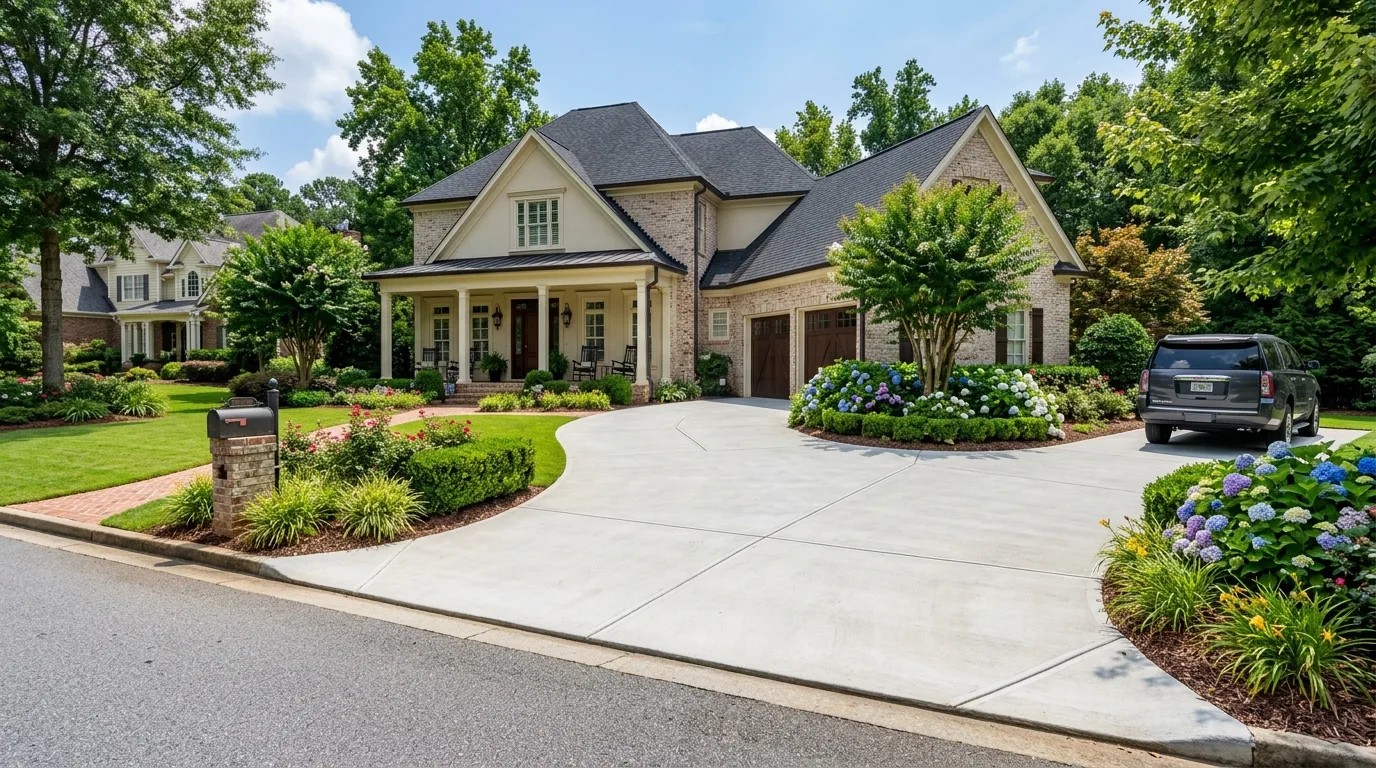
The concrete vs. asphalt driveway question comes up on almost every Haltom City driveway replacement project — and while both materials are common across Tarrant County, the answer for North Texas conditions is usually concrete. That said, “usually” isn’t “always,” and understanding why each material performs the way it does in this climate helps homeowners make the right choice for their specific situation. In this post, we cover cost, lifespan, heat performance, clay soil behavior, and maintenance for both materials in Haltom City’s conditions.
Concrete Driveways in Haltom City — Free Estimates
We'll help you compare your options and choose the right material for your project. Call (888) 376-0955.
Why the Texas Climate Makes This Decision Different
The concrete vs. asphalt question plays out differently in Haltom City than it does in, say, Minnesota. In colder climates, concrete’s vulnerability to freeze-thaw cycles is a significant concern. In North Texas, the primary threats are summer heat above 95°F and Tarrant County’s expansive clay soil — and these factors favor concrete decisively.
Asphalt is a petroleum-based material that softens in heat. Haltom City’s summer highs, which regularly reach 95–100°F and climb higher during heat events, soften standard asphalt binders enough that heavy vehicles can create ruts and imprints. Black asphalt also absorbs heat more aggressively than light-colored concrete, creating a surface temperature differential that makes asphalt noticeably hotter to walk on during summer months in neighborhoods like Cascade Heights.
Concrete’s main weakness in Texas — UV degradation and surface scaling without sealing — is manageable through periodic sealing. Its strength — heat resistance, rigidity, and longevity — directly addresses the primary threats this climate presents.
Cost Comparison: Concrete vs. Asphalt in Haltom City
Upfront cost: Asphalt typically costs $3–$5/sqft installed in Tarrant County. Concrete costs $4–$8/sqft — a 25–60% premium over asphalt for the same area. On a 500 sqft driveway, that’s $1,500–$2,500 vs. $2,000–$4,000. The concrete premium is real and meaningful for budget-constrained projects.
Long-term cost: This is where concrete’s advantage emerges. A well-installed concrete driveway in Haltom City lasts 30–50 years with minimal maintenance. Asphalt lasts 15–20 years before requiring significant work, and asphalt driveways require crack sealing every 3–5 years and full resealing every 5–7 years. The lifetime cost per year of service is often comparable between materials — or favors concrete when the full maintenance cost of asphalt is factored in.
Lifespan in North Texas Conditions
Concrete: 30–50 years with proper installation and periodic sealing. The main longevity risk in Haltom City is Tarrant County’s expansive clay soil — concrete on a properly compacted base with rebar reinforcement and control joints routinely reaches the 35–40 year mark. Improperly built concrete fails much sooner, which is why base preparation and reinforcement questions are so important when evaluating contractors.
Asphalt: 15–20 years in North Texas conditions. Heat accelerates asphalt oxidation — the binding oil dries out, leaving the surface brittle and prone to cracking. Texas UV intensity accelerates this process compared to cooler climates, which is why the typical asphalt lifespan in Haltom City is on the lower end of national averages.
Performance on Tarrant County’s Clay Soil
Both materials sit on top of Tarrant County’s expansive clay, so both experience the same soil movement forces. The difference is in how each material responds to that movement.
Concrete is rigid. It resists bending until the force exceeds its design limits, then cracks. With proper reinforcement and control joints, concrete distributes soil movement forces across the slab and concentrates any resulting cracking at the joints. A properly built flatwork slab may develop hairline cracks at control joints over time — but these are expected, manageable, and don’t affect structural function.
Asphalt is flexible. It deflects under soil movement rather than cracking rigidly — which sounds like an advantage but actually produces a different failure mode. Asphalt that repeatedly flexes over clay soil movement develops alligator cracking and rutting that requires patching and eventual overlay resurfacing. The flexibility that prevents brittle fracture produces fatigue cracking over time.
In practice, both materials need periodic repair in Haltom City’s soil conditions. Concrete’s repair cycle is less frequent and more predictable.
Get a Concrete Driveway Estimate for Your Haltom City Home
Proper base prep for Tarrant County clay, rebar reinforcement, 30+ year results. Call (888) 376-0955.
Maintenance Requirements
Concrete: Sealing every 3–5 years with a silane/siloxane penetrating sealer protects the surface from moisture infiltration and UV degradation. Beyond sealing, minor crack filling as needed. Major work is rare on properly installed concrete before the 20–25 year mark.
Asphalt: Crack sealing every 3–5 years and full reseal coating every 5–7 years. Rutting repair and patching as needed. Major overlay or full replacement typically needed at 15–20 years. The ongoing maintenance cost of asphalt over a 30-year period adds significantly to its total ownership cost.
When Asphalt Makes Sense in Haltom City
Asphalt is worth considering when upfront cost is the primary constraint and the plan is to sell the property within 10–15 years. The lower installation cost and acceptable appearance at time of sale may make it the practical choice in that scenario. Asphalt is also common for long country driveways where surface area makes concrete’s per-square-foot premium prohibitive.
For most Haltom City homeowners who plan to stay in their homes, concrete’s lower lifetime cost, superior heat performance, and greater longevity make it the better investment.
Frequently Asked Questions
Does concrete really last longer than asphalt in Texas heat?
Yes — concrete is significantly more heat-resistant than asphalt. Asphalt’s binding oil softens at temperatures that North Texas regularly exceeds in summer, causing surface rutting and accelerating oxidation that shortens lifespan. Concrete’s rigid matrix is unaffected by temperatures well above 100°F. See our concrete driveway installation service page for what proper installation looks like.
Can I put concrete over existing asphalt in Haltom City?
Technically possible but rarely recommended. Concrete bonded over asphalt inherits the asphalt’s movement and any differential settlement, which typically causes the concrete overlay to crack within a few years. Removing the asphalt and starting with a fresh sub-base produces far better results. The demo cost ($2–$4/sqft for asphalt removal) is worth paying for a 30-year concrete driveway.
How do Haltom City neighbors typically choose between concrete and asphalt?
Concrete is the dominant choice for residential driveways across Tarrant County — the combination of heat performance, longevity, and the North Texas resale market’s preference for concrete surfaces makes it the standard. Asphalt is more common for larger commercial or agricultural properties where cost per square foot drives the decision. Read our driveway cost guide for Haltom City for a complete concrete pricing breakdown.
Related: