Best Time to Pour Concrete in North Texas: Seasonal Guide
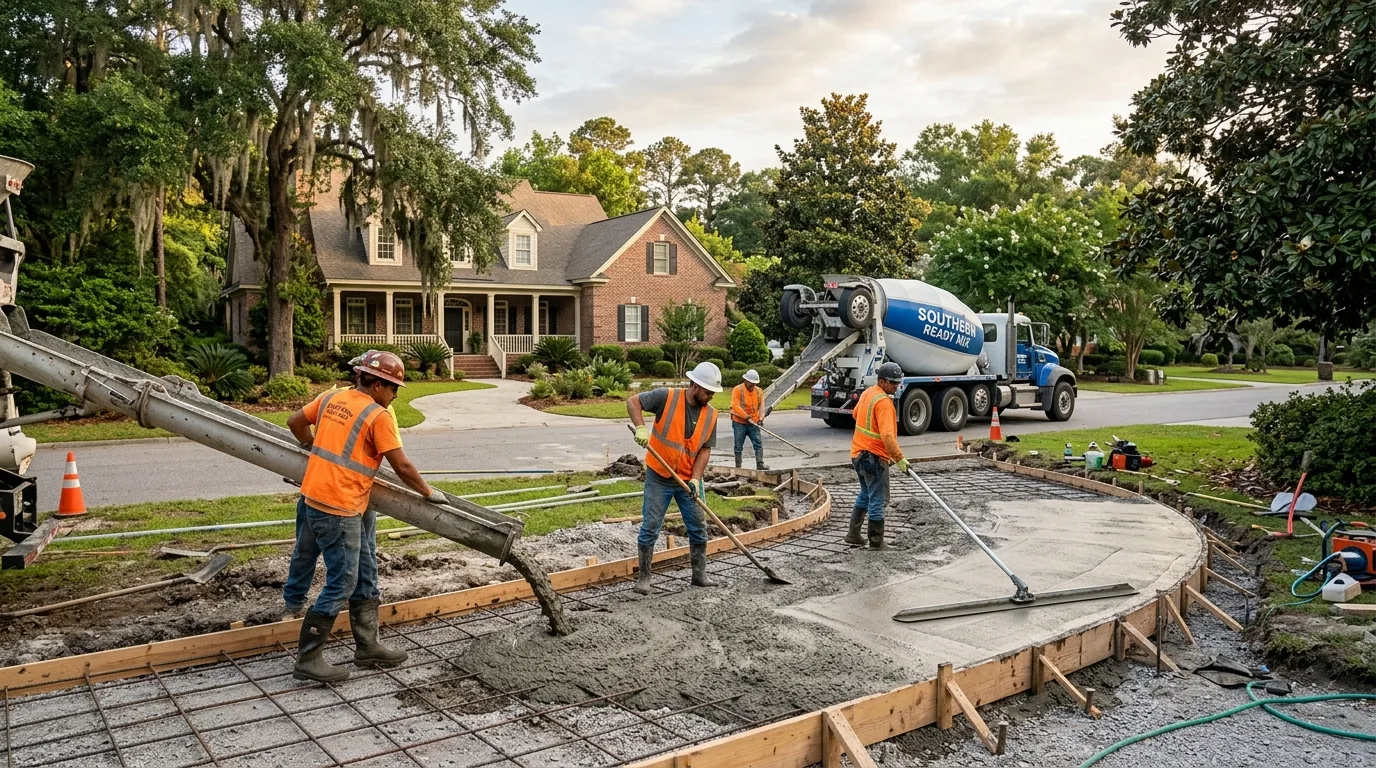
Spring and fall are the best times to pour concrete in North Texas — but knowing why, and what to do when a project can’t wait for ideal weather, makes all the difference. Timing affects concrete strength, surface finish quality, and long-term durability. In this post, we cover the ideal seasonal windows for Haltom City concrete projects, the risks of summer and winter pours, and how experienced contractors manage off-season work to protect your investment.
Schedule Your Haltom City Concrete Project
We plan pours around North Texas weather windows. Free estimates — call (888) 376-0955.
Why Season Matters for Concrete in Haltom City
When to pour concrete in North Texas isn’t just a scheduling preference — it’s an engineering decision that affects the finished product. Concrete gains strength through a chemical process called hydration, which requires water and time at appropriate temperatures. When conditions deviate significantly from the 50–75°F optimal range, that process is disrupted — and the consequences show up as surface cracking, reduced strength, or premature failure.
Haltom City’s climate creates distinct challenges at both extremes. Summers average high temperatures of 95–100°F from June through August, with lows that rarely dip below 75°F even at night. This heat drives moisture out of fresh concrete so quickly that the surface can crack before it’s even finished — a phenomenon called plastic shrinkage cracking. Winters bring their own risk: overnight lows in December through February average 34–40°F, meaning fresh concrete poured in the afternoon can experience freezing conditions before it develops enough strength to resist freeze damage. Concrete that freezes before reaching 500 PSI compressive strength can be permanently weakened.
Spring: The Best Window for Concrete in Haltom City
March through May offers what concrete contractors across Tarrant County call “ideal conditions” — temperatures consistently in the 60–80°F range, lower humidity than fall, and long daylight hours that give crews more working time per day. Rain risk is higher in spring than fall, but modern weather forecasting makes it straightforward to plan pours around rain windows.
Spring is especially good for stamped concrete patio work. The temperate conditions extend the working window — the time between pour and initial set — giving crews enough time to stamp complex patterns across larger surface areas without the slab hardening unevenly. Properties near Birdville Trails Park and throughout the Cascade Heights neighborhood book spring slots early for this reason.
Fall: Nearly as Good as Spring
September through November is Haltom City’s second-best window for concrete. Temperatures mirror spring, rain risk is lower than spring, and the ground has had all summer to dry out — meaning soil moisture conditions are more stable. Fall is particularly good for foundation pours where soil saturation is a concern. The main limitation is shorter daylight hours compared to spring, which matters on larger projects.
Summer Concrete in Haltom City: What It Requires
Summer pours between June and August are possible but require specific measures to protect concrete quality. Experienced contractors schedule pours at dawn — when temperatures are 10–15°F cooler than midday — to gain as much working time as possible. Retarding admixtures slow set time to compensate for heat. Misting the forms and sub-grade with cool water before the pour reduces the initial heat load. Evaporation retarder sprayed on the surface after screeding slows moisture loss.
After finishing, curing compounds or wet-cure blankets protect the surface for a minimum of 7 days. Shade structures over freshly poured slabs are common on summer jobs in Haltom City. These measures add modest cost — typically $0.25–$0.75/sqft in labor and materials — but they’re what makes a summer pour produce results comparable to a spring installation.
Timing Your Concrete Pour in Haltom City
We schedule around North Texas weather to protect every project. Get your free estimate today.
Winter Concrete in Haltom City: Risks and Mitigations
December through February brings the lowest pour volumes of the year in Haltom City — and for good reason. Overnight lows averaging 34–40°F mean that a slab poured in the afternoon may face near-freezing temperatures before it reaches the strength threshold that protects against freeze damage. If the concrete freezes, water in the mix expands, disrupting the hydration process and potentially producing a weakened, spalled surface that looks fine initially but fails within the first year.
Winter pours require insulated blankets placed over the concrete immediately after finishing and left for 3–7 days depending on forecast temperatures. Accelerating admixtures speed strength gain to get the concrete through the vulnerable early period faster. Pre-warmed mixing water helps maintain concrete temperature at delivery. These precautions work reliably for mild winters — a Haltom City January that stays above 28°F overnight — but major cold events make pouring inadvisable regardless of protective measures.
Cost Factors for Seasonal Concrete Pours
Standard concrete flatwork costs $4–$8/sqft in Haltom City across all seasons. Summer and winter pours that require protective measures add $0.25–$1.00/sqft depending on the mitigation needed. Spring and fall pours carry no seasonal premium — they’re the baseline price. For large projects where quality and longevity are paramount, scheduling around the optimal seasonal windows is the simplest way to eliminate the extra cost and risk of off-season work.
Frequently Asked Questions
What is the optimal temperature range for pouring concrete in North Texas?
The ideal concrete placement temperature is 50–75°F with moderate humidity — conditions that Haltom City’s spring and fall provide reliably. Below 40°F, special cold-weather measures are required. Above 90°F, hot-weather protocols (retarders, early morning pours, curing blankets) are essential. The goal is keeping the concrete at a temperature that allows gradual, complete hydration without drying out too fast or freezing.
Can I pour concrete in Haltom City in July?
Yes, but it requires early morning scheduling, a retarding admixture, evaporation retarder, and post-pour curing protection. A qualified contractor can deliver good results in summer conditions with these measures in place. Ask any contractor you’re evaluating specifically what hot-weather protocols they follow — a complete answer should cover pour timing, admixtures, and curing method. Read our concrete driveway installation service page for what to expect from a Haltom City driveway project.
How does Haltom City’s clay soil affect pour timing?
Tarrant County’s expansive clay soil is most saturated in spring — which is generally fine for pouring since wet clay is more stable than dry, contracted clay. However, very wet spring conditions can make sub-grade preparation difficult if the soil is too soft to compact properly. Fall offers a soil that has dried from summer heat and contracted to a more stable baseline, making it excellent for foundation and large flatwork pours.
Related: